
'Patriotism won 400+ seats for the Congress party in 1984. How much will nationalism bring in, in 2019, is the question,' asks Saisuresh Sivaswamy.

Against the backdrop of the West Indies team's withdrawal from its tour of India, Rediff.com takes a look at instances when cricket tours have been called off midway through a series.

Prime Minister Narendra Modi, who will be the second Indian prime minister to visit Fiji after Indira Gandhi, comes at a time when the islands are moving to consolidate the new democratic system
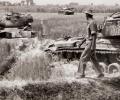
The competition for the worst or most perilous 10 years has always been between the 1960s and the 1980s, points out Shekhar Gupta.

Much of the the-foreign-media-is-biased hysteria that we see on social media these days is provoked by the bad press the regime is getting in the West, points out Vir Sanghvi.

L N Mishra was the first Cabinet minister to be assassinated in Independent India. After Monday's judgment, almost 40 years after the murder, the minister's son tells Rediff.com why the government must reveal who really killed his father.

'Bihar, Maharashtra, Karnataka, Bengal can be the game changers of 2024.'


'Nowhere amidst the efflorescence of 13 military bands, 16 marching contingents and 22 tableaux was there any hint that far from being a rich country of poor people, the closely guarded secret is that India is a poor country of extremely rich people,' notes Sunanda K Datta-Ray.

'I don't believe that it beholds democracies like us who claim to be the largest democracy in the world, to have such a thin skin about the possibility of foreign commentary.'

Modi accused the Congress of criticising EVMs and the functioning of the Election Commission after they were reduced to 44 seats from 400 in Lok Sabha. "They did not question the EVMs after the recent Karnataka elections," he added.

As Pranab Mukherjee steps down as President, we remember the man, the politician, the Rashtrapati.

'Though the RSS honours Sardar Patel, who actually banned it, the real hero in the story of its rise is Jayaprakash Narayan,' says Vir Sanghvi.

'The BJP has no presence where the regional parties are strong.' 'And we should think of the Congress and support the Congress in those places where it is the dominant regional party.' 'The leaders of the other parties (have to) get together on this simple principle of one candidate against the BJP candidate.'

The real risk is that the core assumption -- that the votes for a candidate sponsored by an alliance will at least equal the sum total of its parts -- proves to be facile, observes T N Ninan.

Will a time come when people will look beyond what they see as Modi'S strengths and begin to wonder why they have got poorer or sicker under his rule, asks Vir Sanghvi.

'People are questioning these highways and expressways in UP because ultimately, they want to get bread and butter first.'

"It is about time that India and its institutions are protected from these 'institution wreckers'," said Jaitley.

The US government was readying a strategy should India smash military power of West Pakistan.

The period of Internal Emergency from June 1975 till January 1977 was a great learning experience for me. I was still a student and one of the youngest detenus who spent 19 months in detention for having opposed the Emergency.
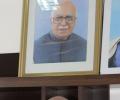
Five years ago, Bharatiya Janata Party veteran L K Advani spoke to Sheela Bhatt/Rediff.com on the Emergency. On the 40th anniversary of Indian democracy's darkest hour, we reproduce the interview.
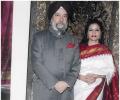
'But he was very quick and did a very stylish adab.' 'Of course, I didn't expect him to hug.'

He challenged the Congress to select someone 'capable' as its president, who did not belong to 'that one family'.

British Prime Minister David Cameron on Tuesday ordered an urgent investigation into a decision by Margaret Thatcher's government to send an SAS officer to India in 1984 to advise Indira Gandhi in planning Operation Bluestar to flush out militants holed up in the Golden Temple.

If only the Congress could rebuild on its strengths and develop a modern enough ideology, we could again be moving towards a clearer two-party political landscape, asserts Shekhar Gupta.
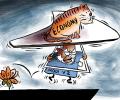
'If he were to ask me, I would tell Mr Modi that the real Congress legacy he has to undo is not Nehru's social and political philosophy -- which fits India perfectly -- but his daughter's economic philosophy,' says T C A Srinivasa Raghavan.

Would Ukraine be such a pushover if it had that nuclear stockpile?' asks Shekhar Gupta.

'BJP loses a democratic election, then buys MLAs from the ruling party's flock and rides to power in these states.' 'Do you think Atalji would have tolerated this?'

If the party's members aren't sure what it stands for, see no path to wealth or power, and endure control by a dynasty, which, almighty as it is within the party, cannot get them the votes, they are likely to explore options, notes Shekhar Gupta.

'Modi wants to reverse everything Nehru did, but is shy of touching his daughter's most unwise policies.' 'There is no example of this more stark than bank nationalisation,' says Shekhar Gupta.

The Emergency greatly influenced the RSS' makeover from a fringe force in the Indian political imagination to one that could have its own man sworn in as prime minister in two decades' time. A riveting excerpt from Christophe Jaffrelot and Pratinav Anil's India's First Dictatorship: The Emergency, 1975-1977.

Jaitley gathered a group of people and burnt an effigy of then prime minister Indira Gandhi, making him, in his own words, the 'first satyagrahi' against the Emergency.
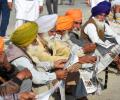
In politics, if your objective is only winning elections, just Chanakya neeti might do. For governance you need both, Chanakya neeti and Ram Rajya. You can neither beat up the farmers into submission, nor dismiss them as 'Khalistanis', asserts Shekhar Gupta.

This is a challenge India's political establishment will have to face unitedly, without looking for electoral benefit, warns Vir Sanghvi.

This is something that Modi's critics are reluctant to accept: He is the most popular leader that India has seen since Indira Gandhi, says Vir Sanghvi.
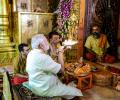
'We think we know him because he's written about everyday.' 'But how many of us know him as a person?'
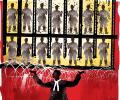
'Judges have families; they have their future to worry about.' 'In an atmosphere of fear, the judges are constantly under some kind of psychological pressure.' 'I have seen this is happening across the board in the country today.'

On Tuesday, November 20, 2018, 34 years and 19 days later after the horrific crimes, two men were sentenced to death and life in prison for their involvement in the anti-Sikh riots of 1984 in which over 3,000 Sikhs were killed. It was the first verdict after the riots-related cases were reopened by a Special Investigation Team in 2015. In his novel Man With The White Beard, Shah Alam Khan recalls a calamitous time in India's history.
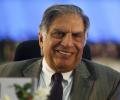
'I think some of us, like Mukesh Ambani, myself and those of us who head industrial units, ought to really focus on what we can really do to make the world a safer place, maybe 50 or 100 years from now.' 'For instance, how can we deal with climate change and global warming, right now?' 'The effects of it may not be felt now; in fact, we may pay a price for it today, but it will help the generations to follow.'

'1984 is important as it is the beginning of the State making war against its citizens in India.' 'Since then, we had the government of the day organising riots or genocide by attacking certain people.'
